

Best Time to Visit Paradise Valley: Month-by-Month Water Report
Best Time to Visit Paradise Valley: Month-by-Month Water Report
Real water levels, weather, and exactly when the pools are full versus dry — month by month
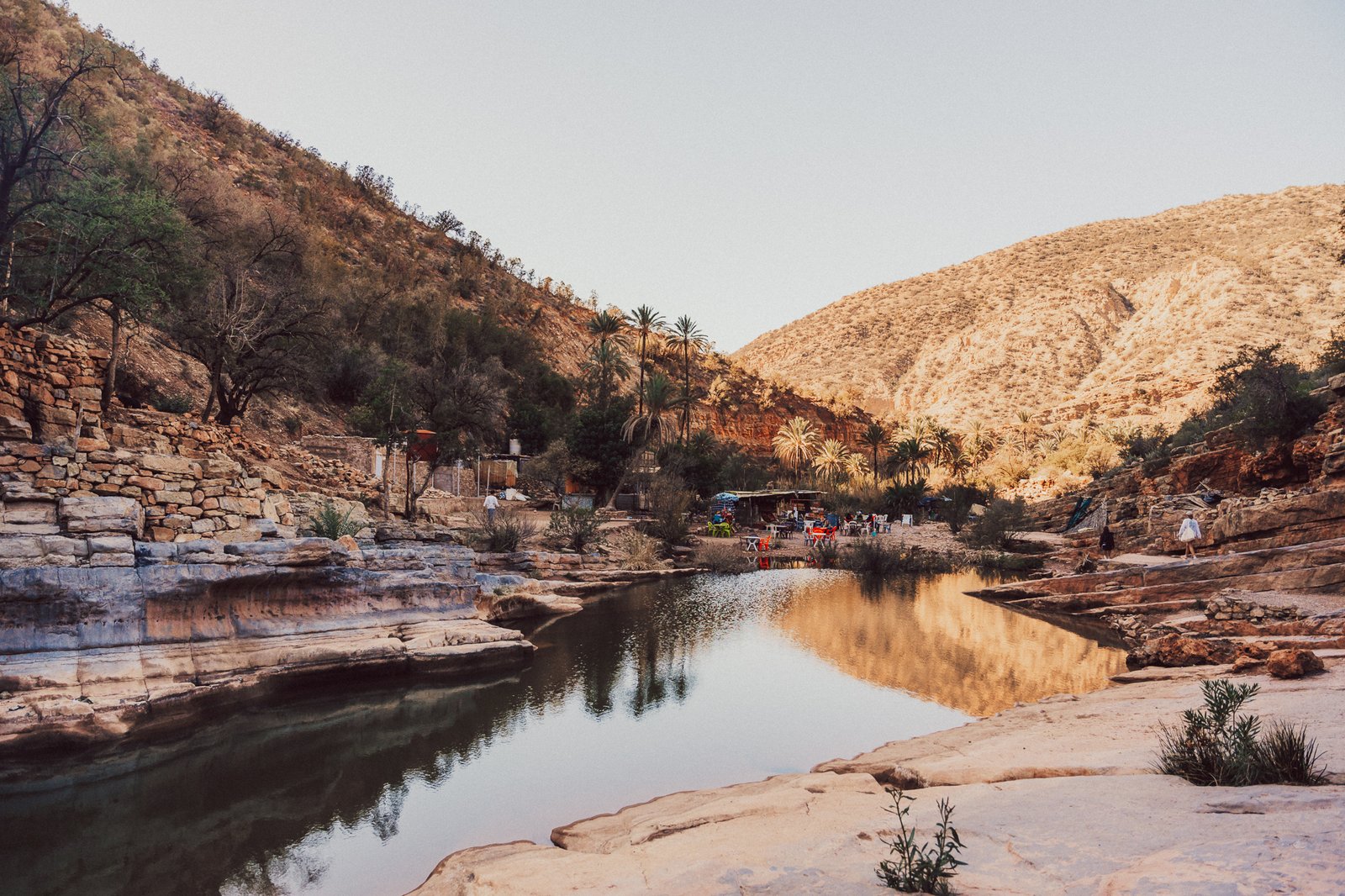
The best time to visit Paradise Valley is spring (March-May), when winter rain has fully replenished the pools and temperatures are still comfortable, with a secondary good window in autumn (September-November) before the dry season fully sets in. Several independent sources narrow the absolute peak to February-April specifically, when water levels are typically highest. Summer (June-August) is the least reliable period for swimming — pools can run low or run dry, though the shaded palm groves still offer relief from Agadir's heat. Always ask locally about recent rainfall before you go, regardless of the calendar month.
- Why "Best Time to Visit" Answers Vary by Source
- Paradise Valley Water Levels by Month: The Full Table
- Paradise Valley Agadir in January
- February-May: The Peak Window
- Paradise Valley Agadir in Summer (June-August)
- September-November: The Secondary Window
- Paradise Valley Agadir Weather: The Bigger Picture
- Flash Flood Risk in Wet Months
- When Are Paradise Valley Pools Full? The Honest Summary
- FAQ
Why "Best Time to Visit" Answers Vary by Source
If you've compared a few guides already, you've probably noticed the recommended window shifts depending on who's writing: some say February-April specifically, others say March-June, and several add September-November as a second good period. These aren't necessarily contradictions so much as different ways of describing the same underlying pattern — the valley's pools are fed by seasonal rainfall and a river that isn't flowing year-round, so "best time" really means "closest to recent rain," which shifts slightly year to year depending on when the rains actually arrive. We're presenting the fuller range below rather than picking one narrow window and presenting it as the only correct answer, because the honest picture is a gradient, not a hard cutoff.
Paradise Valley Water Levels by Month: The Full Table
| Month | Typical Water Level | Typical Weather | Verdict |
|---|---|---|---|
| January | Rising, variable | Mild, 15-20°C, wetter month | Good, but check for flash-flood conditions after rain |
| February | Rising to strong | Mild, occasional rain | Start of the peak window per several sources |
| March | Strong, pools full | Mild-warm, spring greenery | Excellent — widely cited as a top month |
| April | Strong, pools full | Warm, comfortable | Excellent — the most consistently recommended single month |
| May | Still good, beginning to reduce | Warm | Very good, still within the recommended spring window |
| June | Reducing | Hot, dry season beginning | Transitional — some sources still rate it fair, others already call it the start of the weak period |
| July | Low | Hot, up to ~35°C | Weakest swimming month — shade and cooler pockets still worthwhile |
| August | Low | Hot, up to ~35°C | Weakest swimming month — same caveats as July |
| September | Still low, early recovery possible | Warm, cooling slightly | Fair — better for hiking than guaranteed swimming |
| October | Recovering with early rain | Mild, comfortable | Good — cited by several sources as ideal for hiking specifically |
| November | Recovering, wetter month begins | Mild, rain increasing | Good, secondary window |
| December | Rising with winter rain | Mild, wetter month | Good, though check flash-flood conditions after rain |
This table synthesizes multiple independently-reported accounts and represents typical patterns, not a guarantee for any specific year — Morocco's rainfall has genuinely varied year to year recently, so a "typically full" month can still run lower in a dry year. Ask locally about recent rainfall before you travel, regardless of which month you're visiting.
Paradise Valley Agadir in January
January sits within Morocco's wetter season, so water levels are generally rising toward the year's fullest point rather than already at their peak. Temperatures are mild (roughly 15-20°C), genuinely pleasant for hiking and walking around the pools, even if swimming itself may feel cold. The specific thing to watch for in January: this is one of the months most associated with flash-flood risk after heavy rain (covered in full below) — check conditions before setting out rather than assuming a calm valley automatically stays that way.
February-May: The Peak Window
This is the period cited most consistently, across the widest range of independent sources, as the best time to visit — and it's also consistent with what we've published elsewhere on this site. Winter rainfall has fed the pools to their fullest by this point, the surrounding landscape turns genuinely green with spring growth, and temperatures are warm without yet reaching summer's intensity. April specifically comes up more often than any other single month as the top recommendation, sitting at the sweet spot between "pools are full" and "it's not yet uncomfortably hot."
Paradise Valley Agadir in Summer (June-August)
Be realistic about this season if swimming is your priority: Morocco's summers are increasingly dry, and by July-August, water levels are commonly reported as low, sometimes leaving pools shallow or, in drier years, largely dry. This isn't every source's absolute worst-case scenario — several note that at least some pools typically retain enough water for a swim even in summer, and the shaded palm groves genuinely do offer welcome relief from Agadir's heat regardless of water levels. But if a full, photogenic swim is the specific goal, summer is honestly the season most likely to disappoint that particular expectation, even though the valley remains a reasonable heat-escape destination either way.
September-November: The Secondary Window
Autumn doesn't get quite the same universal praise as spring, but it's a genuine second-best window worth knowing about. September tends to still be dry, carrying over from summer, with water levels only beginning to recover. October is specifically praised across multiple sources as an excellent hiking month, with comfortable temperatures even if pools aren't yet fully restored. By November, early winter rain starts refilling the valley again, moving conditions back toward the good range.
Paradise Valley Agadir Weather: The Bigger Picture
Paradise Valley sits in the Anti-Atlas foothills, which means its weather runs slightly different from coastal Agadir — generally a touch cooler and wetter given the elevation, but following the same broad seasonal pattern: mild, wet winters and hot, dry summers, with spring and autumn as the moderate in-between seasons. One additional factor worth knowing: an easterly wind pattern locally called the Chergui can occasionally bring hazier skies and warmer-than-expected air even outside peak summer, which can catch visitors off guard on an otherwise mild-looking day.
Flash Flood Risk in Wet Months
This deserves its own clear warning rather than a passing mention: after heavy rainfall, particularly in the November-February window, the valley can genuinely experience flash floods. The clearest, most actionable guidance found across independent sources is simple and worth repeating exactly: never enter the water if it looks brown or appears to be rising. Check with locals about recent rainfall before heading out in winter months specifically, and treat a sudden change in water clarity or level as a reason to get to higher ground, not curiosity to investigate further.
When Are Paradise Valley Pools Full? The Honest Summary
Pools are typically at their fullest from roughly February through May, following winter rainfall, with April most frequently singled out as the single best month. A secondary, less dramatic recovery happens in October-November as early winter rain returns. The pools run lowest from roughly June through September, with July-August being the most consistently weak period for swimming specifically — though the valley remains worth visiting even then for shade, hiking, and scenery, just without the guarantee of a full, deep swim.
Frequently Asked Questions
What is the best time to visit Paradise Valley Agadir?
Spring (March-May), with several sources narrowing the absolute peak to February-April specifically, when winter rain has fully replenished the pools.
What's Paradise Valley like in January?
Mild temperatures (15-20°C) and rising water levels heading toward the year's fullest point, but also a month with real flash-flood risk after heavy rain — check conditions before visiting.
Is Paradise Valley worth visiting in summer?
Yes for the scenery, shade, and hiking, but water levels are commonly low by July-August, so don't plan a summer trip specifically around a guaranteed deep swim.
How do Paradise Valley's water levels change by month?
Generally rising from winter rain through a February-May peak, declining through the dry summer months (lowest around July-August), then gradually recovering from October onward as autumn/winter rain returns.
When are Paradise Valley's pools actually full?
Most reliably February through May, with April cited most often as the single best month across independent sources.
What's the weather like at Paradise Valley compared to Agadir?
Generally similar seasonal pattern but slightly cooler and wetter given the higher elevation in the Anti-Atlas foothills, with an occasional hot, hazy Chergui wind pattern that can affect any season.
Is there a flood risk?
Yes, genuinely, particularly November-February after heavy rain. Never enter water that looks brown or is rising, and check locally about recent rainfall before visiting in wetter months.
Getting there, prices, and what to do once you're there.
Read the complete guide →A local guide can confirm current water levels before you commit to a swimming-focused trip.
Browse guided tours →For live weather and rainfall forecasting before you travel, a general forecast service is more reliable than any fixed monthly average, and Visit Morocco remains the official national tourism reference for broader trip planning.
Water levels and weather patterns in this guide reflect typical conditions synthesized across multiple independent sources at the time of writing (2026) — actual conditions vary year to year with rainfall, so always confirm recent conditions locally before a trip planned specifically around swimming.

AGADIR TRIP GUIDE
Related content
Interdum et malesuada fames